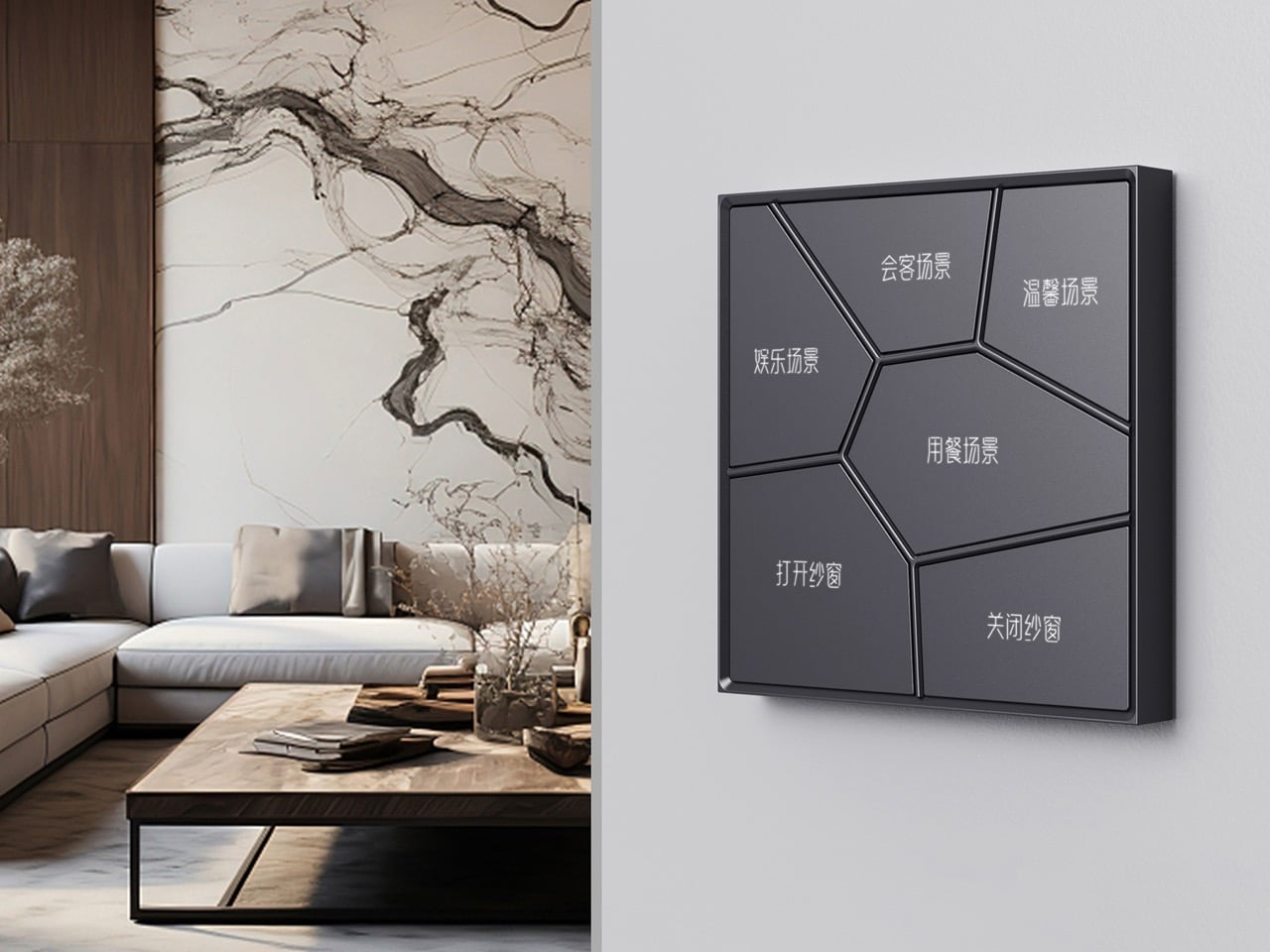
Most wall switches exist to be ignored. You flip them without looking, never registering the object itself, because there is nothing to register. HDL Automation’s Inkslab panel series makes that kind of invisibility impossible. The surface is divided into irregular polygonal cells radiating outward from a central point, a geometry lifted directly from the perforated stone lattice windows of classical Suzhou gardens. Each cell is a button. The ornament and the interface are the same thing.
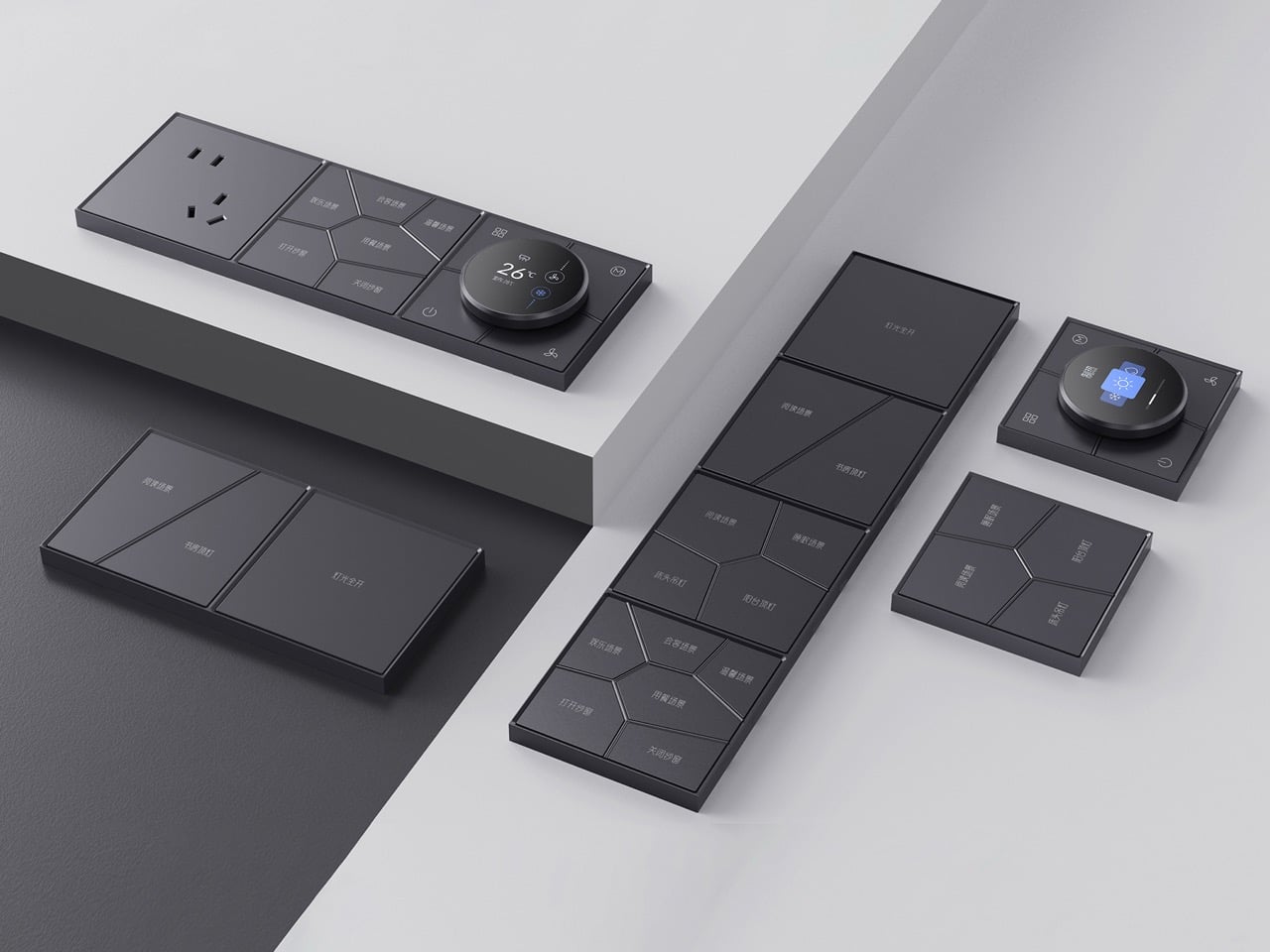
That formal discipline carries through the entire system. Inkslab is a modular series that tiles horizontally and vertically, mixing scene-selector panels, a circular HVAC control knob, power outlets, and single-button tiles into wall-mounted configurations as long or compact as the space demands. It comes in white, brushed champagne gold, matte black, and slate gray, and at 86 x 86 mm per tile, it sits flush against a wall with the quiet confidence of something that belongs there.
Designer: Hdl Automation Co., Ltd.
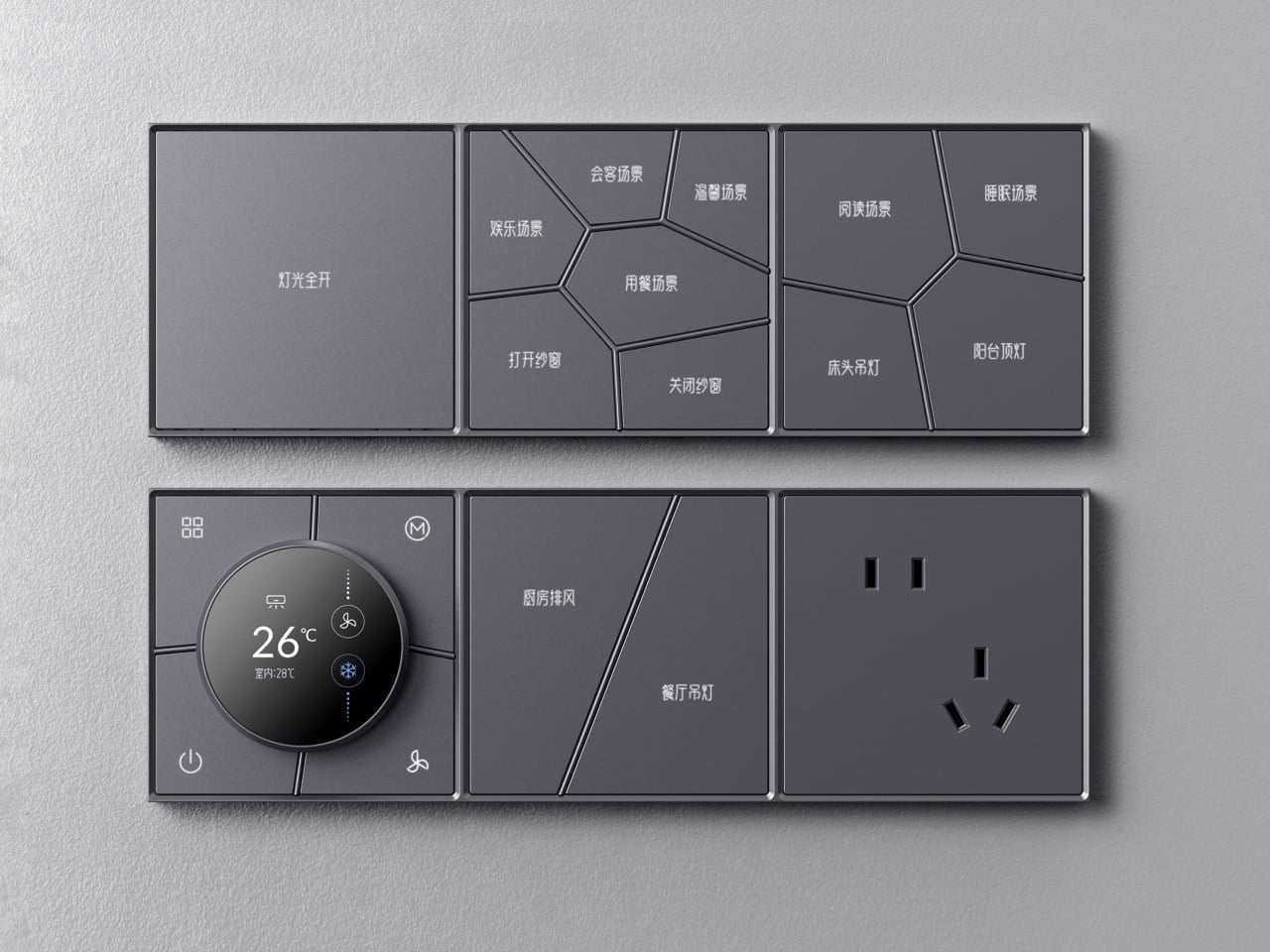
Classical Chinese perforated windows, called “leaky windows” in the original parlance, use irregular polygon grids to divide a wall surface into discrete framed voids. The geometry is simultaneously structural, decorative, and spatial. Inkslab takes that logic and runs it through an interface problem: how do you lay out multiple buttons on a 86 x 86 mm square without it looking like a grid of sad rectangles? The answer turns out to be Suzhou, and it works.
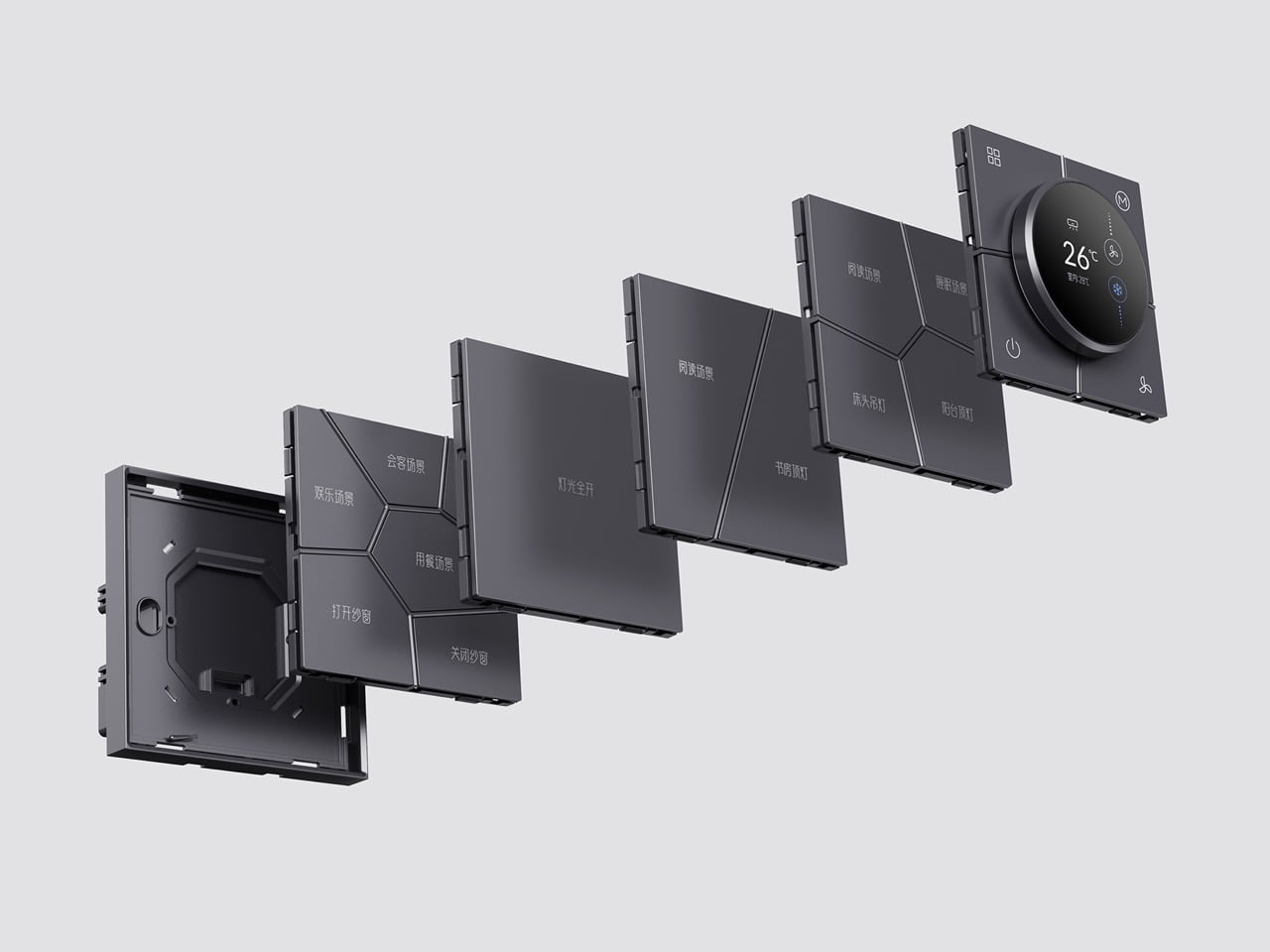
Each tile clips onto a shared wall bracket, and you can run them in any combination horizontally or vertically. The exploded product imagery shows the layering clearly: bracket, individual functional tiles, frame. Mix a three-tile scene-selector run with a power socket tile and the circular HVAC knob module, and you have a fully integrated wall panel covering lighting scenes, climate control, and power in one coherent visual strip. The round knob module in particular is well-considered, its circular display reading temperature and fan settings without interrupting the overall geometry of the panel it sits in.
Instead of manually programming scene modes through an app, the system learns from usage patterns and suggests scenes based on time of day and behavior. Paired with the proximity sensor that wakes the LED backlighting when you approach and cuts it when you leave, the panel behaves more like an attentive object than a passive one. HDL has been in the building automation space since the 1980s, when the company’s founder developed China’s first digital dimming controller, so the intelligence running underneath the Inkslab aesthetic has serious pedigree behind it.
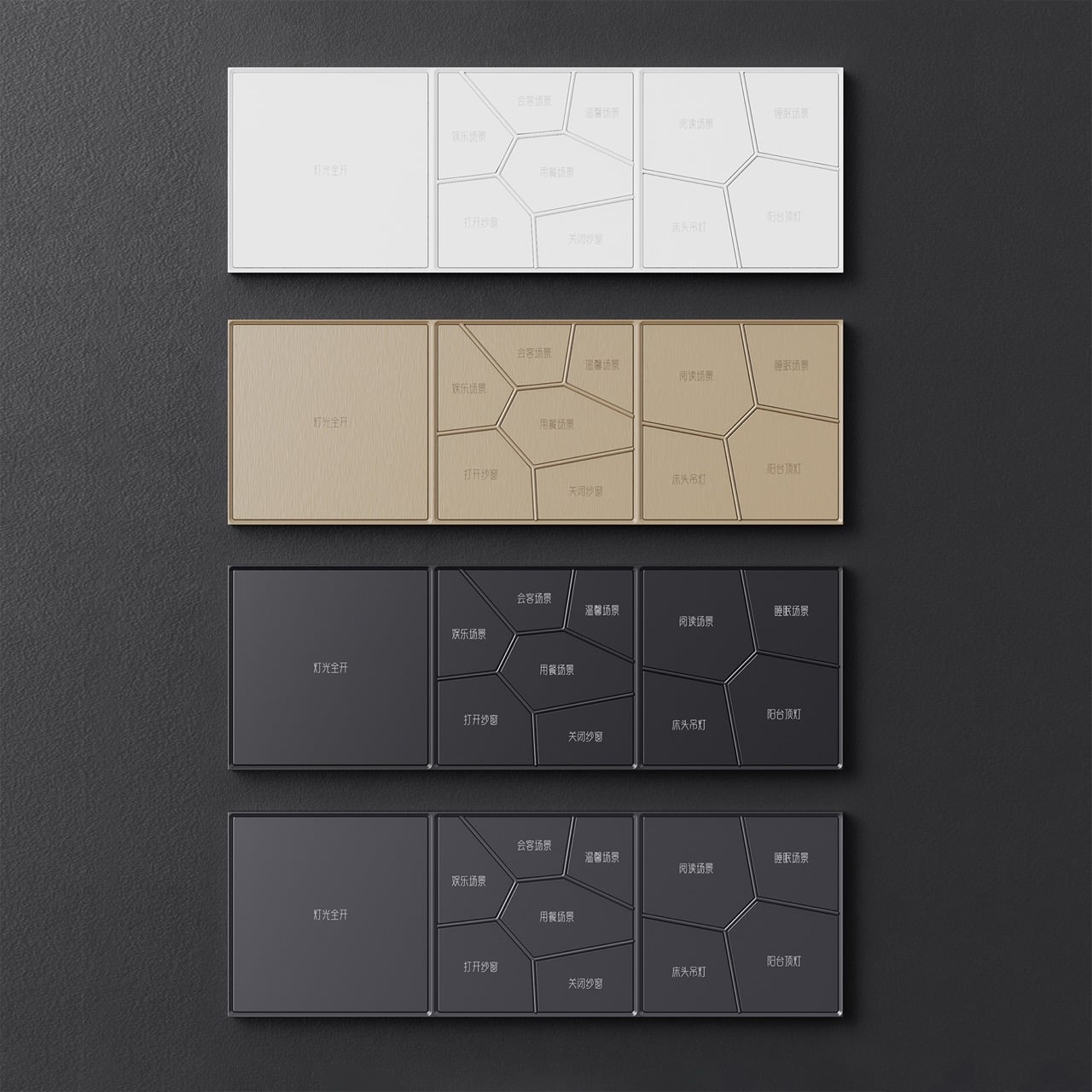
The brushed champagne gold colorway reads closer to high-end architectural hardware than consumer electronics, and the anodizing process gives the aluminum surface a resistance to wear and corrosion that keeps it looking that way over time. Skin-friendly paint on the non-metal variants sounds like a small detail but matters on something you physically touch dozens of times a day. The 10 mm depth keeps the panel from protruding awkwardly from the wall, which is one of those specifications that sounds trivial until you see a chunky smart panel jutting off a freshly plastered surface.
The post Your Light Switch Is the Worst-Designed Thing in Your House. Inkslab Offers An Alternative first appeared on Yanko Design.


0 Commentaires