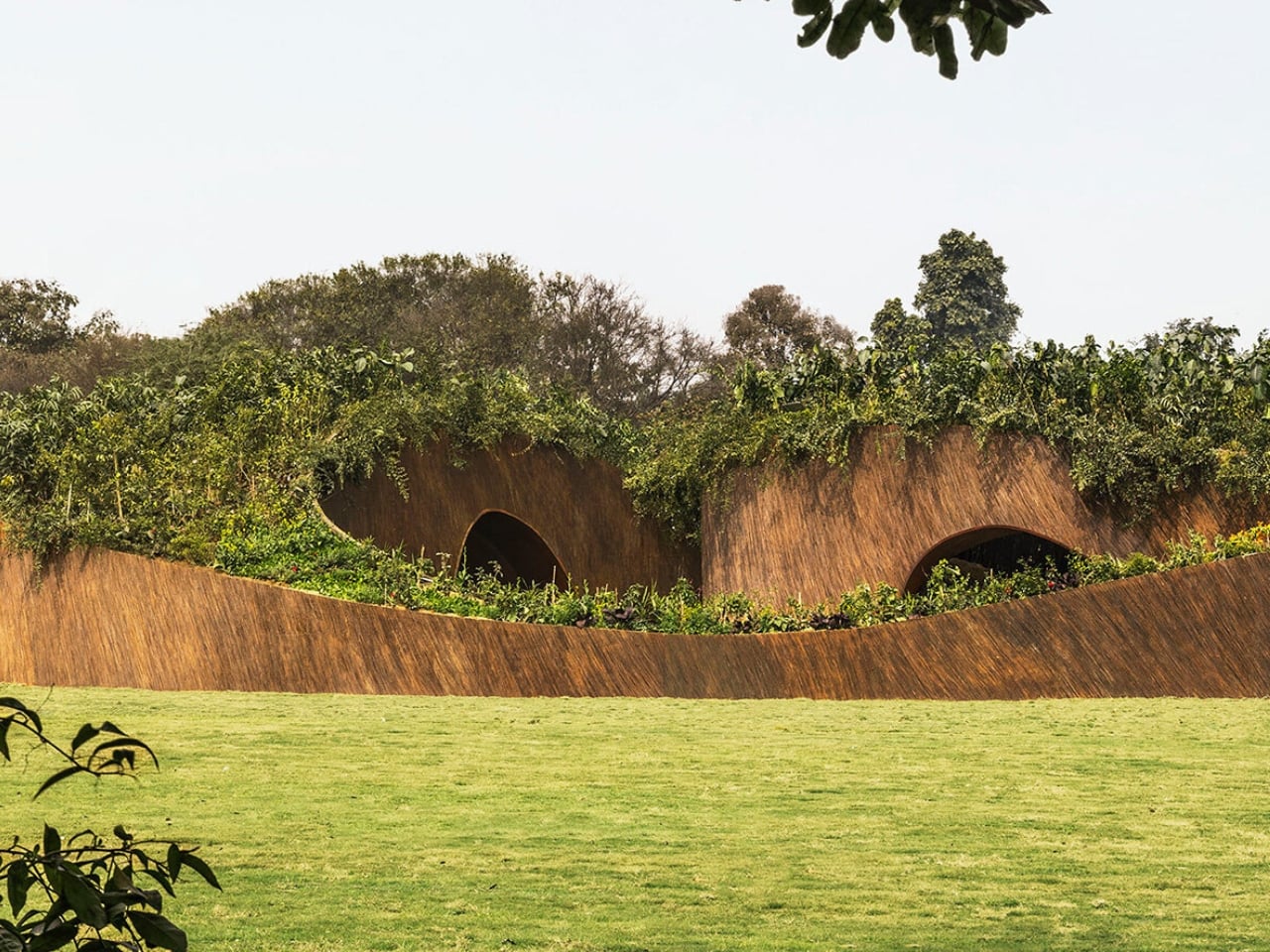
There’s something poetic about turning your worst problem into your best solution. That’s exactly what’s happening at Delhi’s Sunder Nursery, where a stunning new pavilion is literally made from one of India’s most hated plants.
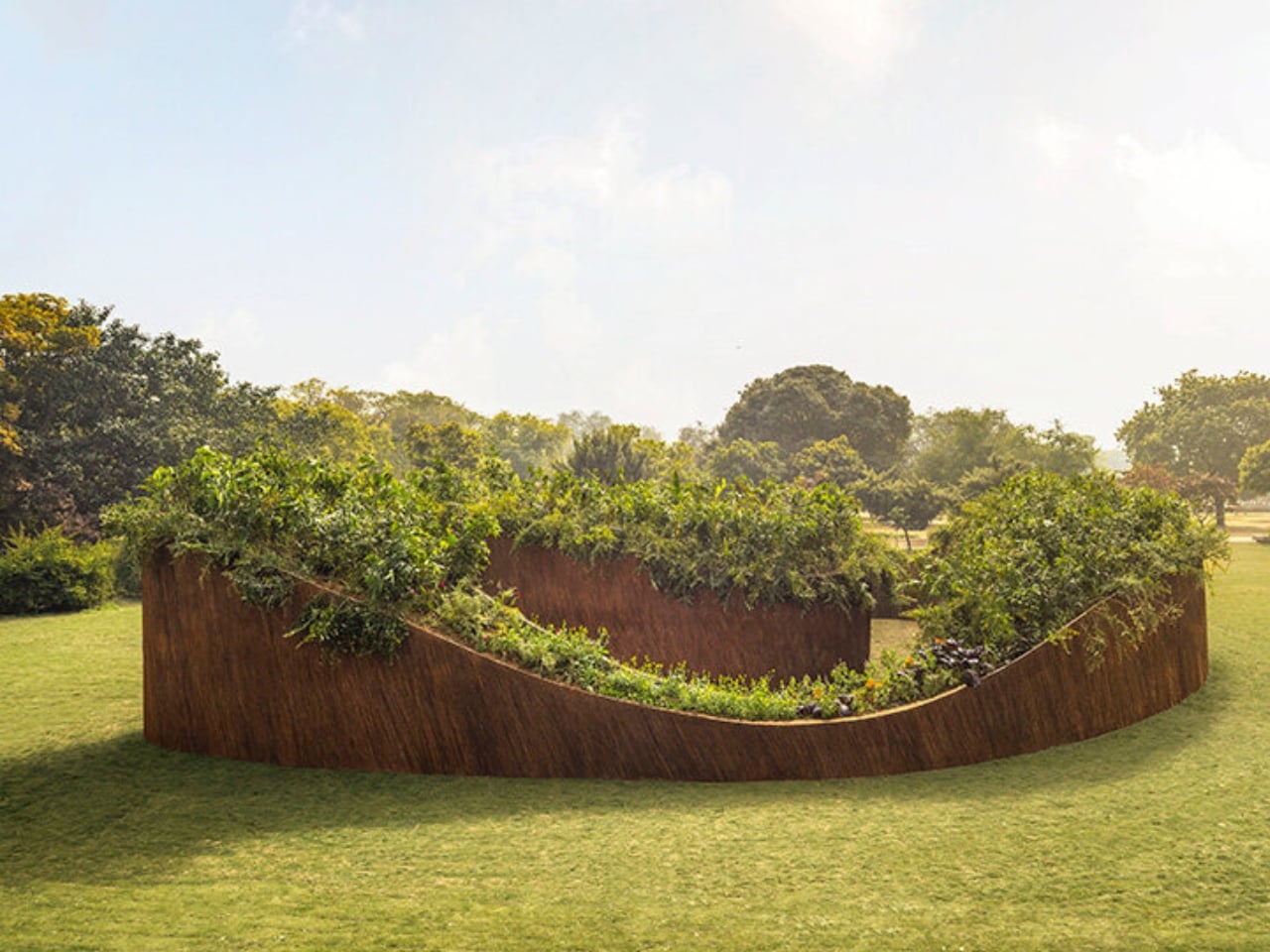
The Aranyani Pavilion looks like a small spiral rising from the lawns, but get closer and you’ll realize its walls are woven from lantana, a plant that’s basically the uninvited guest that took over the whole house. Brought to India centuries ago as an ornamental plant, lantana camara has spread like wildfire across the country. Today, it covers over 13 million hectares and has invaded 44 percent of India’s forest cover, choking native species and creating dense, impenetrable barriers that prevent new growth. But here’s where it gets interesting. Instead of just cursing this invasive species, conservation scientist Tara Lal and Colombian-Cypriot design firm T__M.space decided to do something radical: build with it.
Designers: Aranyani and T__M.space (photos by Lokesh Dang)
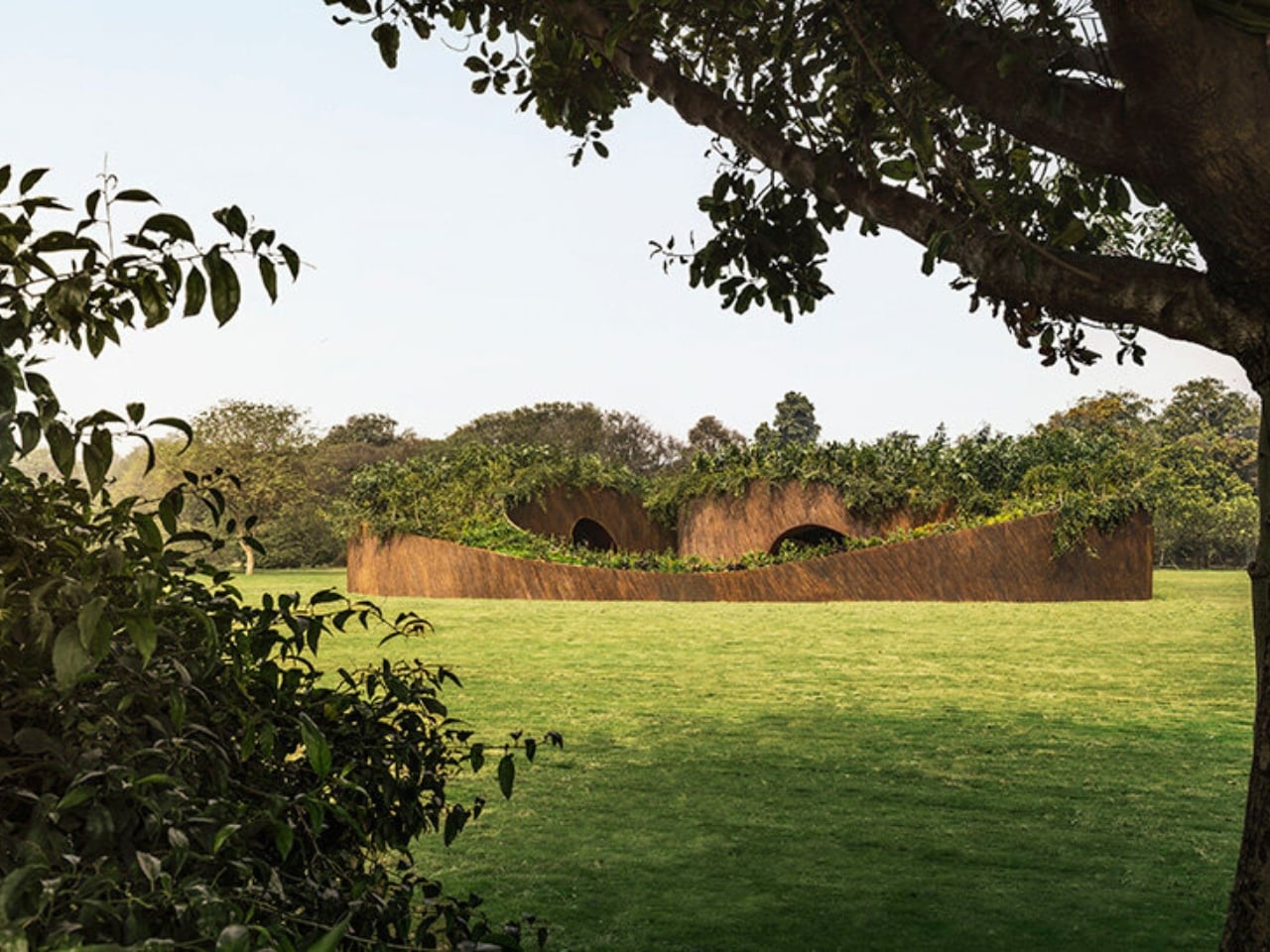
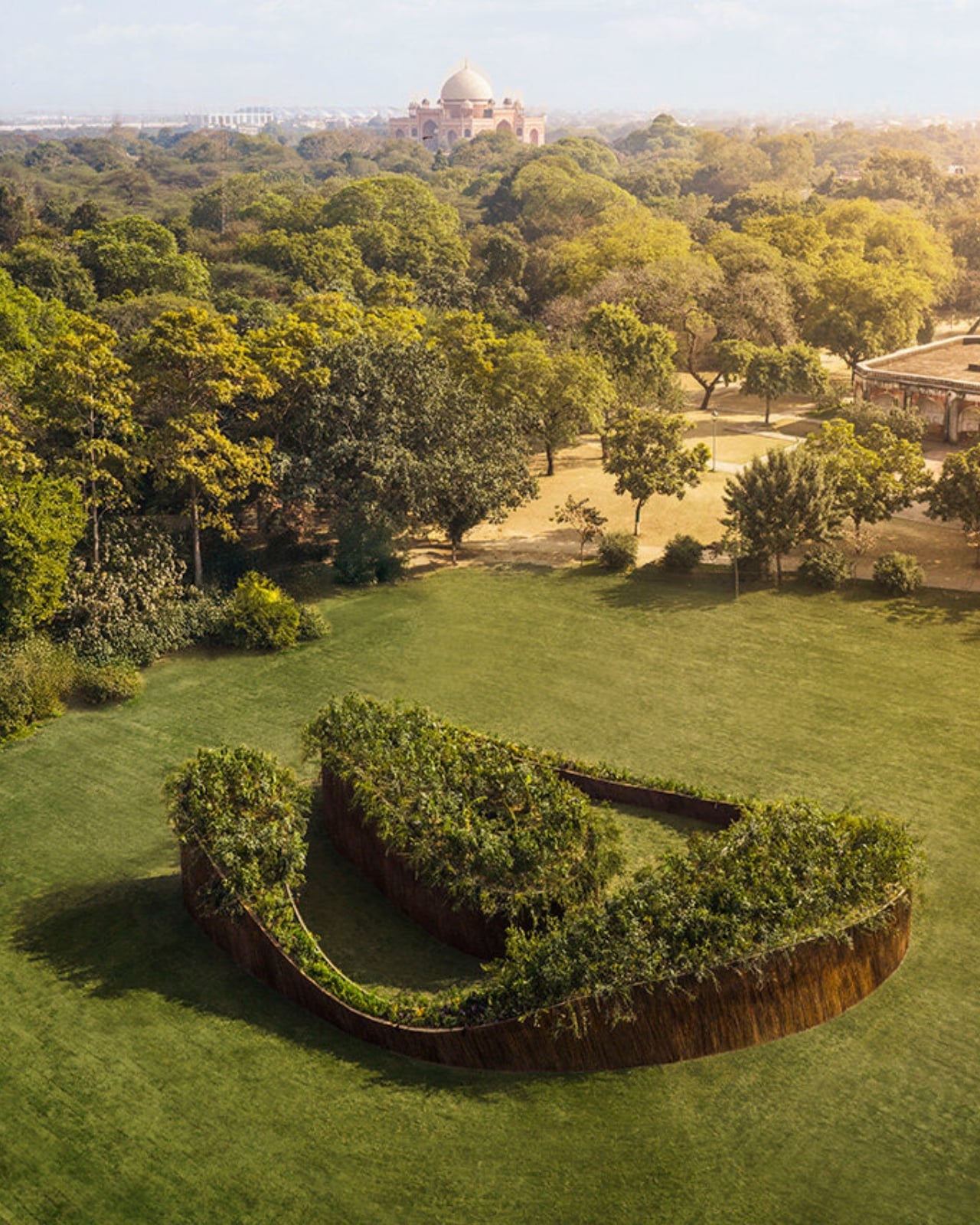
The pavilion occupies a 200-square-meter footprint and features a bamboo skeleton that holds up walls crafted entirely from upcycled lantana stems. The structure spirals inward, creating a rib-like cage that guides visitors toward the center, where a nine-ton rock that was once mining waste sits in a shallow, reflective pool. Above it all, a living canopy of jasmine, neem, tulsi, and bakul plants creates a roof that breathes and grows.
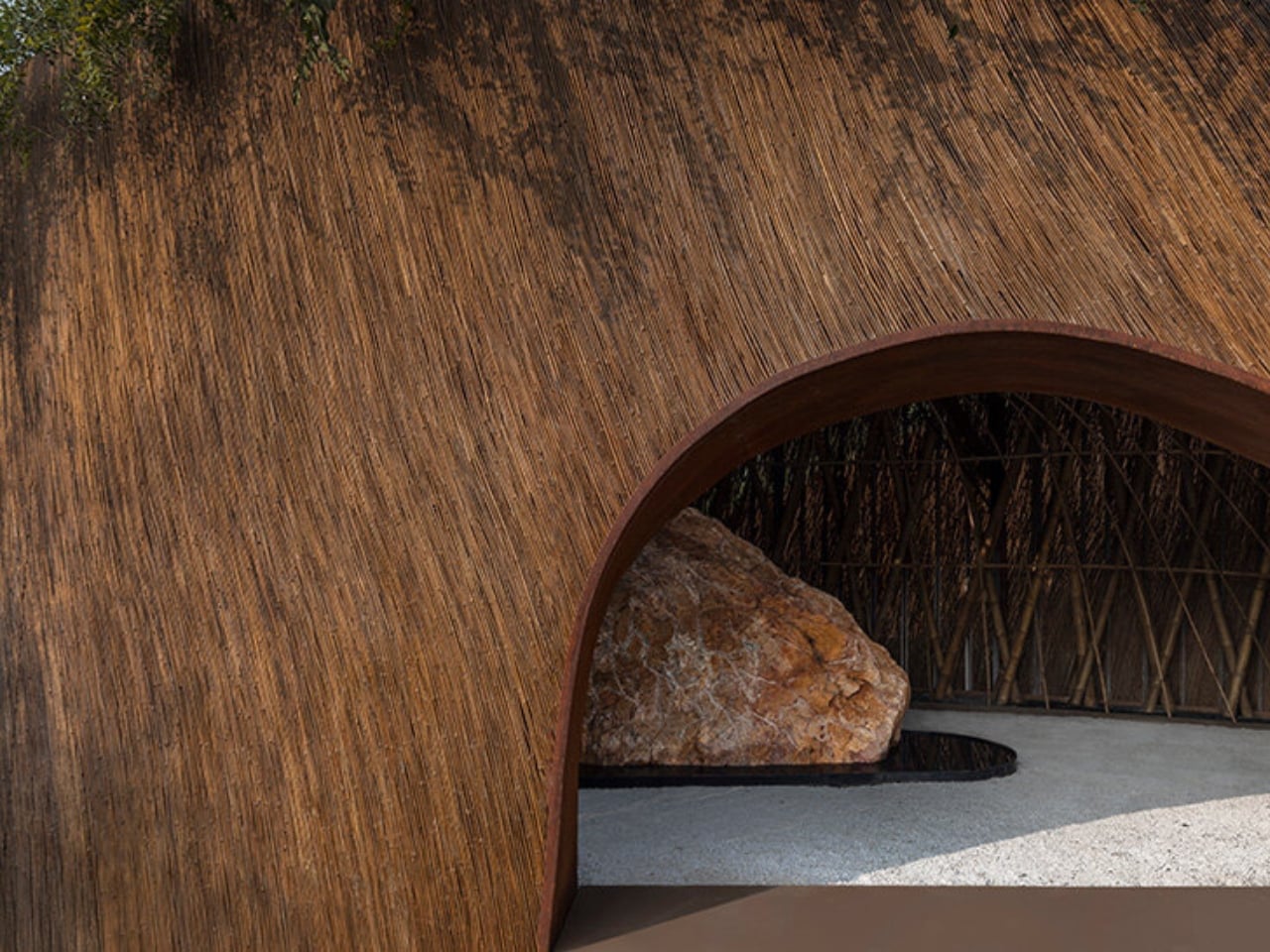
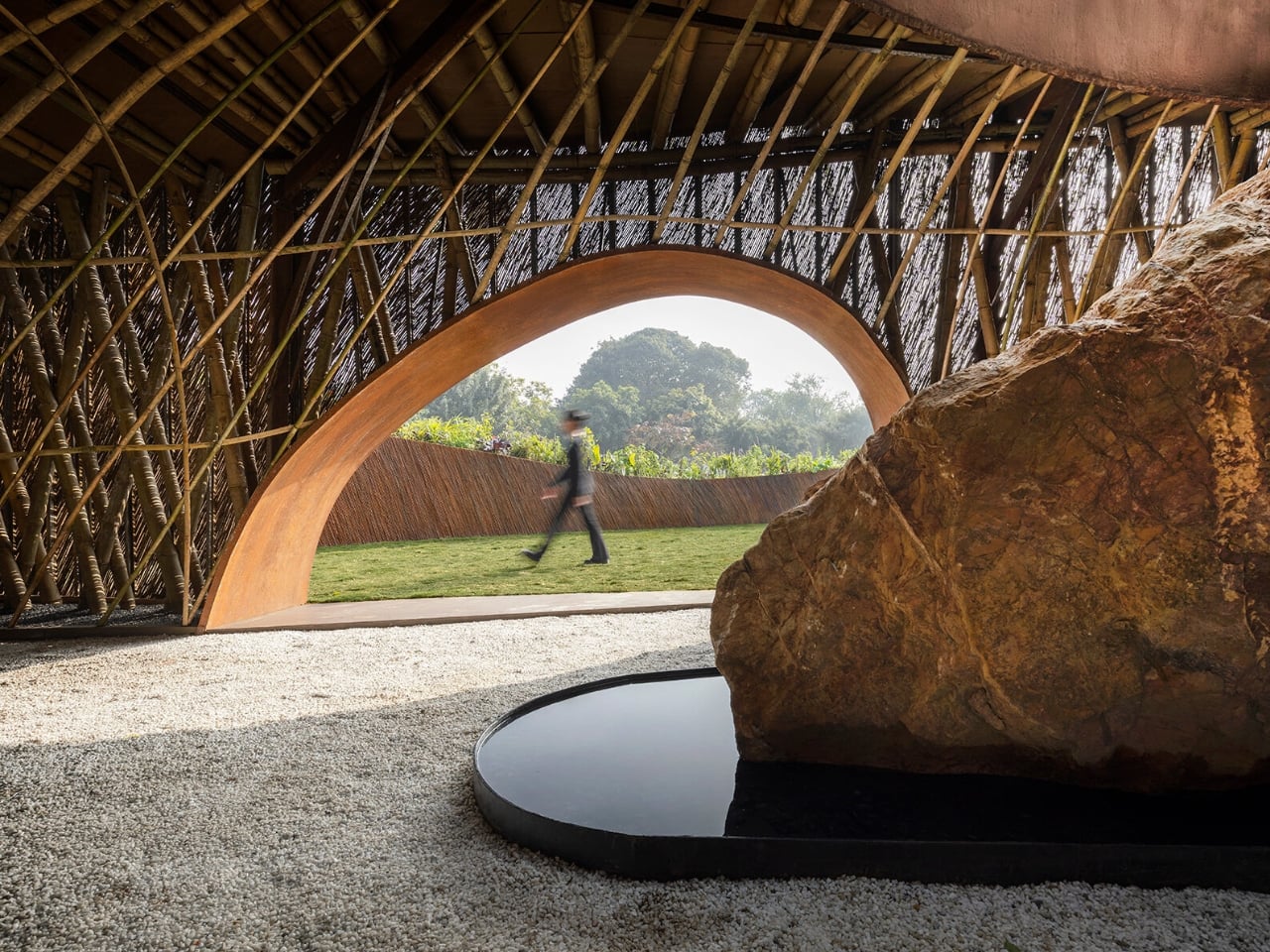
What makes this project so compelling isn’t just the clever upcycling angle. It’s the entire philosophy behind it. The pavilion is inspired by India’s tradition of sacred groves, those ancient forest sanctuaries where communities protected nature as a spiritual act. By using the very plant that destroys these ecosystems and transforming it into something that honors them, the designers have created a kind of architectural karma.
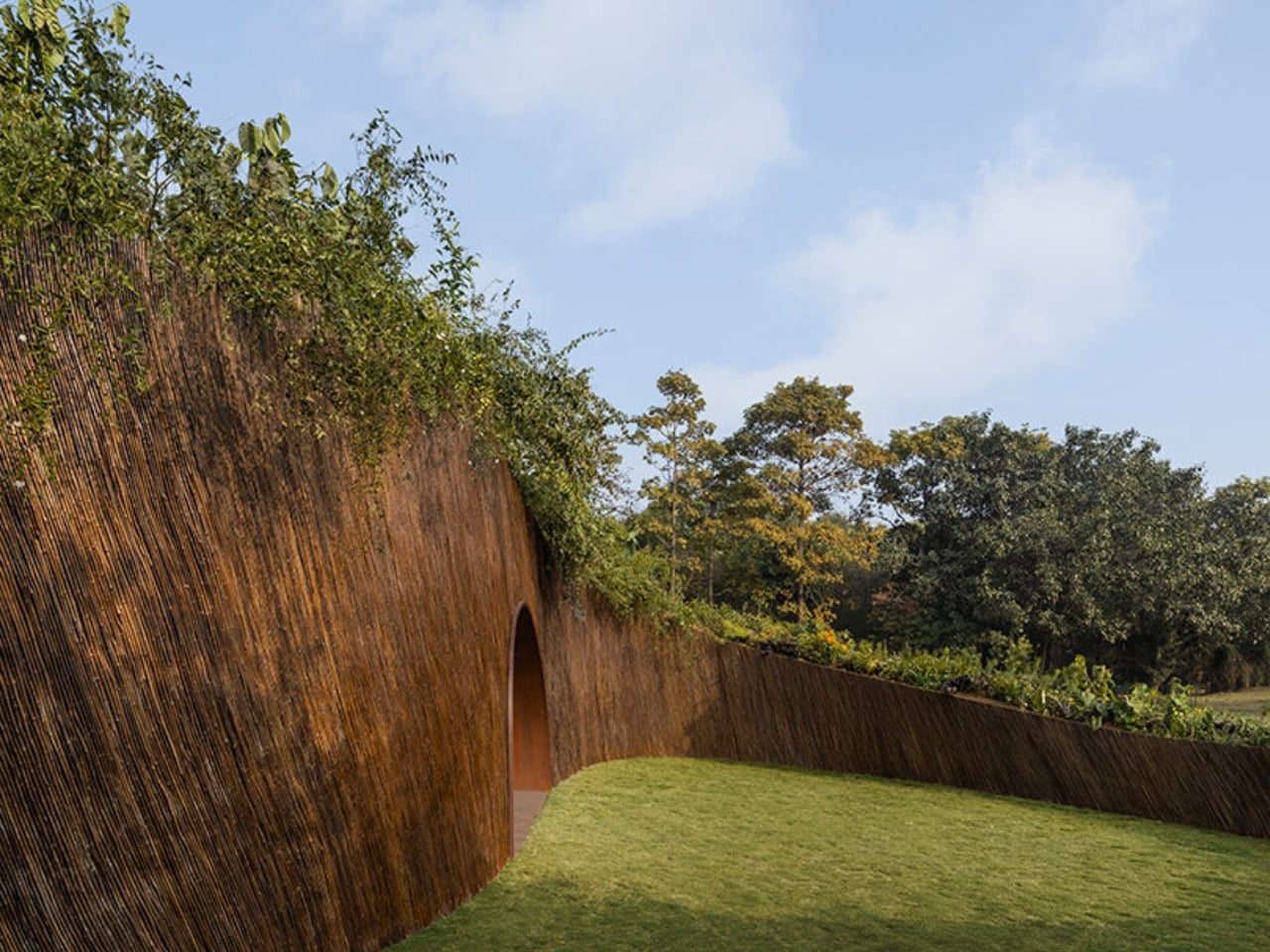
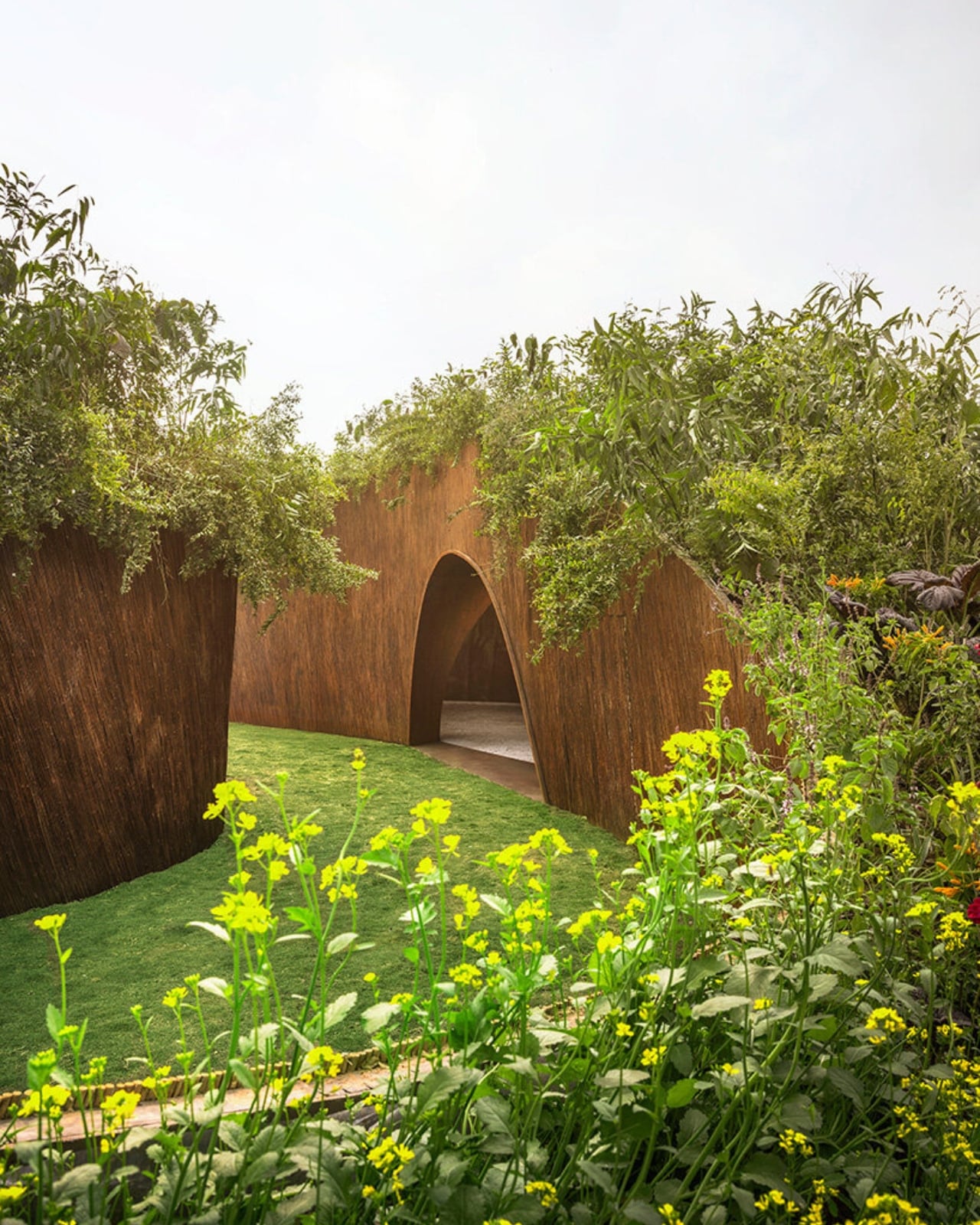
Guillaume Lecacheux of The Works, who led the fabrication, captured it perfectly: “Aranyani captures the dialogue between structure and spirit, a pavilion that stands without grounding, held together by the tensile intelligence of bamboo and the quiet strength of nature.”
The project arrives during India Art Fair as part of a 10-day event curated by Lal’s ecological restoration initiative, also called Aranyani after the Hindu goddess of forests and wild animals. The timing couldn’t be better. As cities like Delhi grapple with pollution, urban sprawl, and disconnection from nature, projects like this offer a different model, one where design doesn’t just create beauty but actively participates in healing.
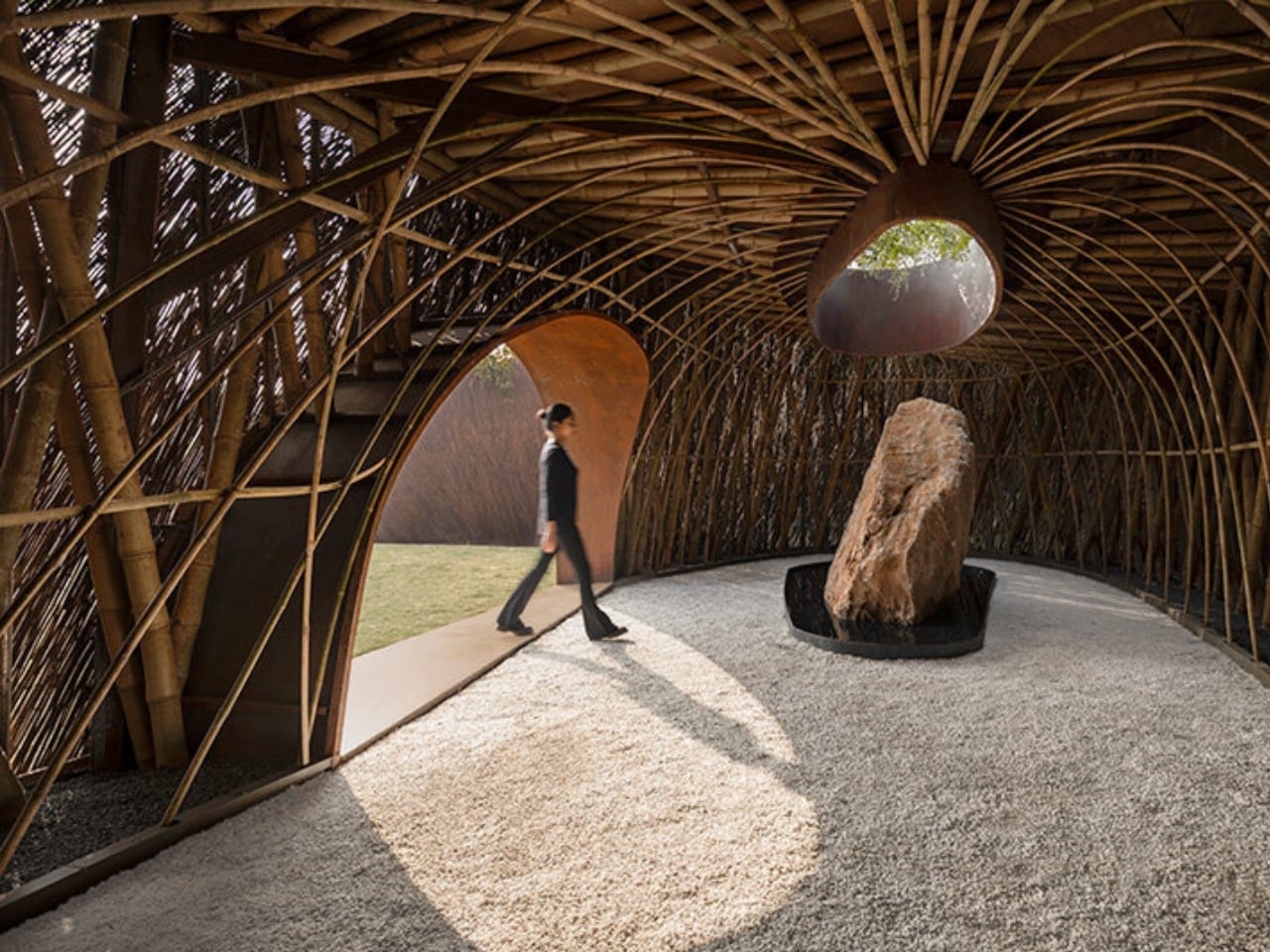
What’s particularly smart about this approach is that it tackles a real environmental problem while creating something culturally resonant. Lantana removal is already part of forest restoration work across India. Rather than letting those harvested stems become waste, they become building material. It’s a circular solution that makes both practical and symbolic sense. The living canopy above the structure reinforces this regeneration narrative. Those indigenous plants, tulsi, neem, jasmine, and bakul, aren’t just decorative. They’re rooted in India’s ecological and cultural memory, species that have meaning beyond aesthetics. They represent what should be growing in these landscapes, what lantana has pushed out.
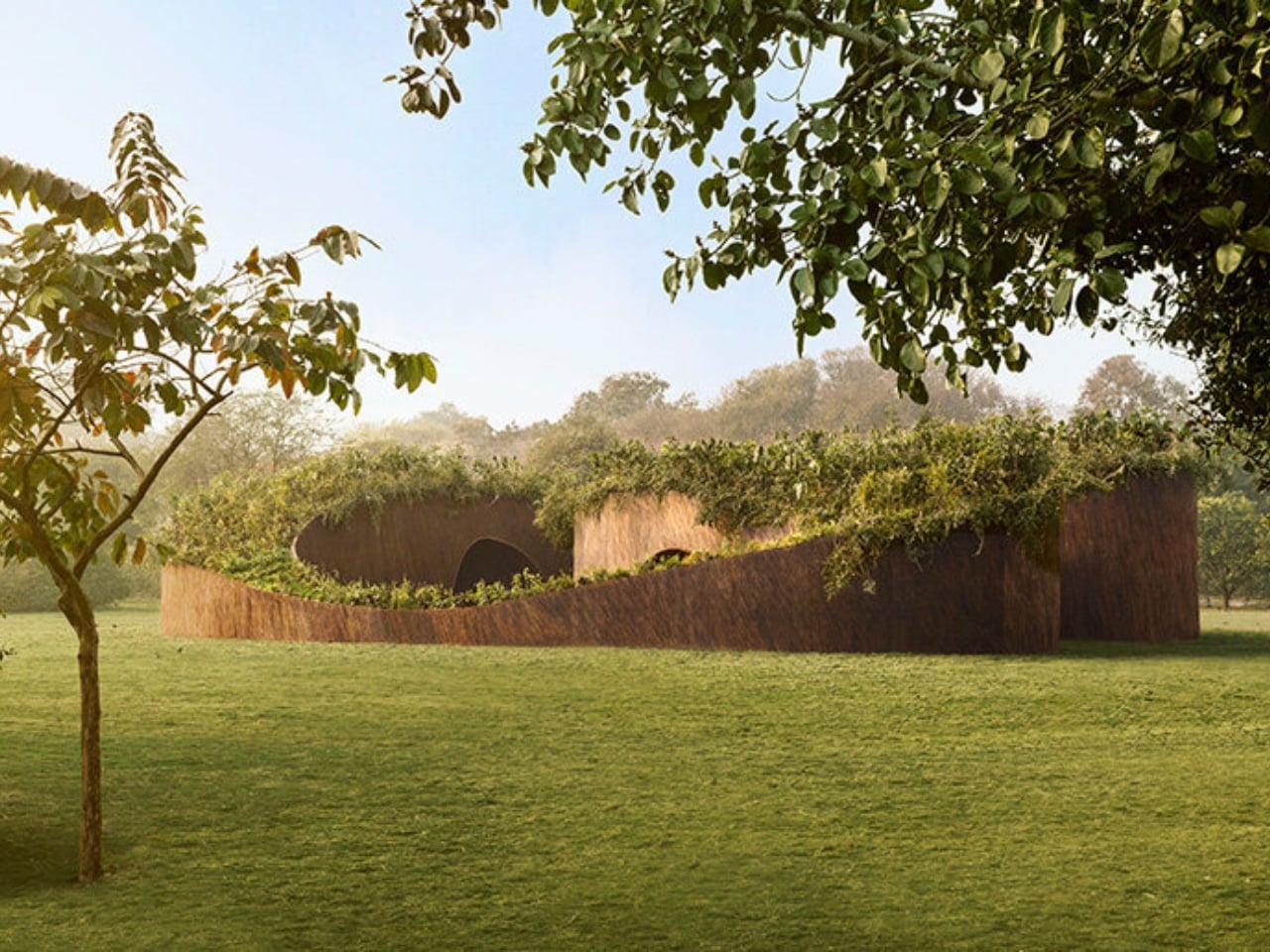
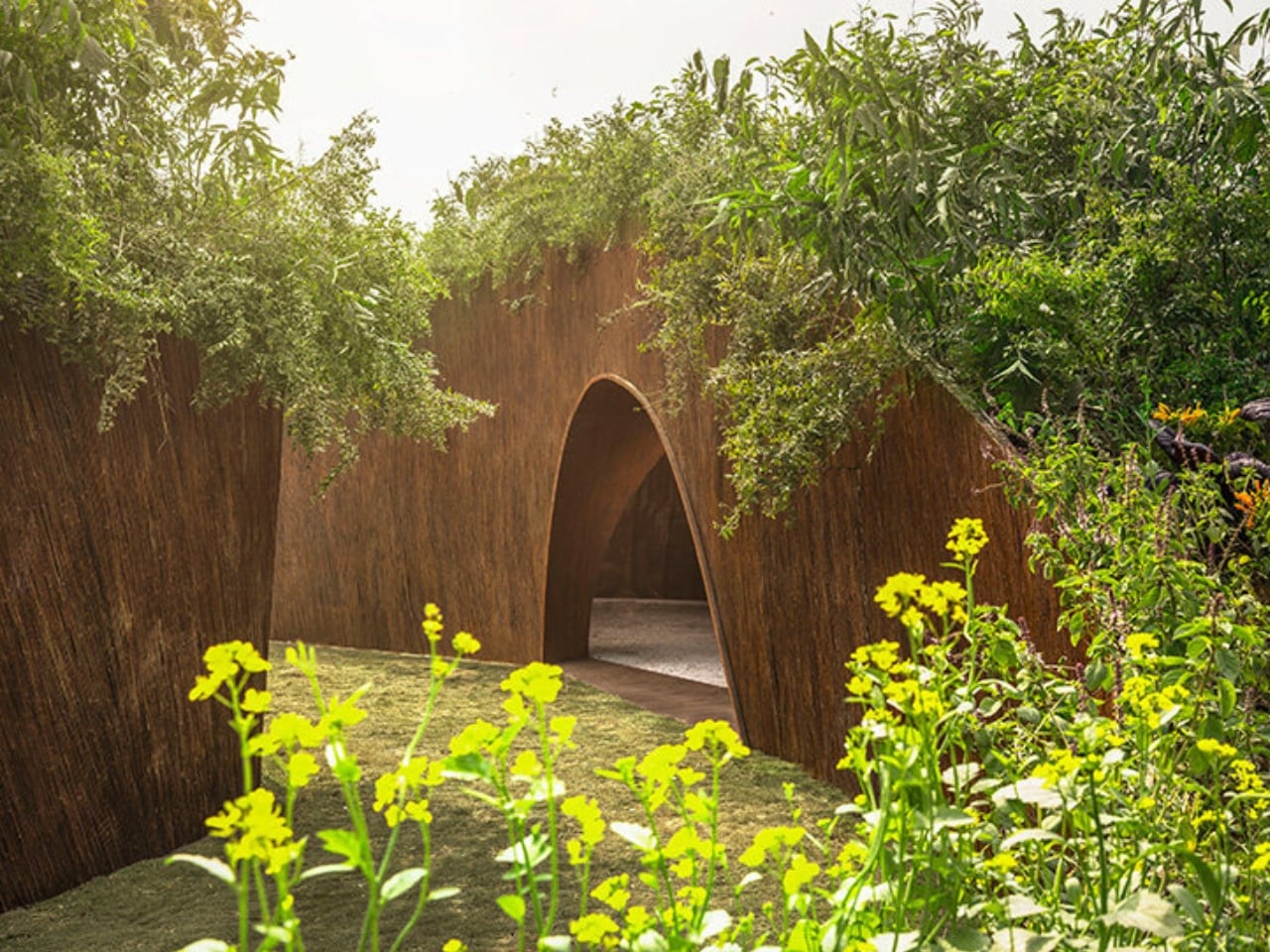
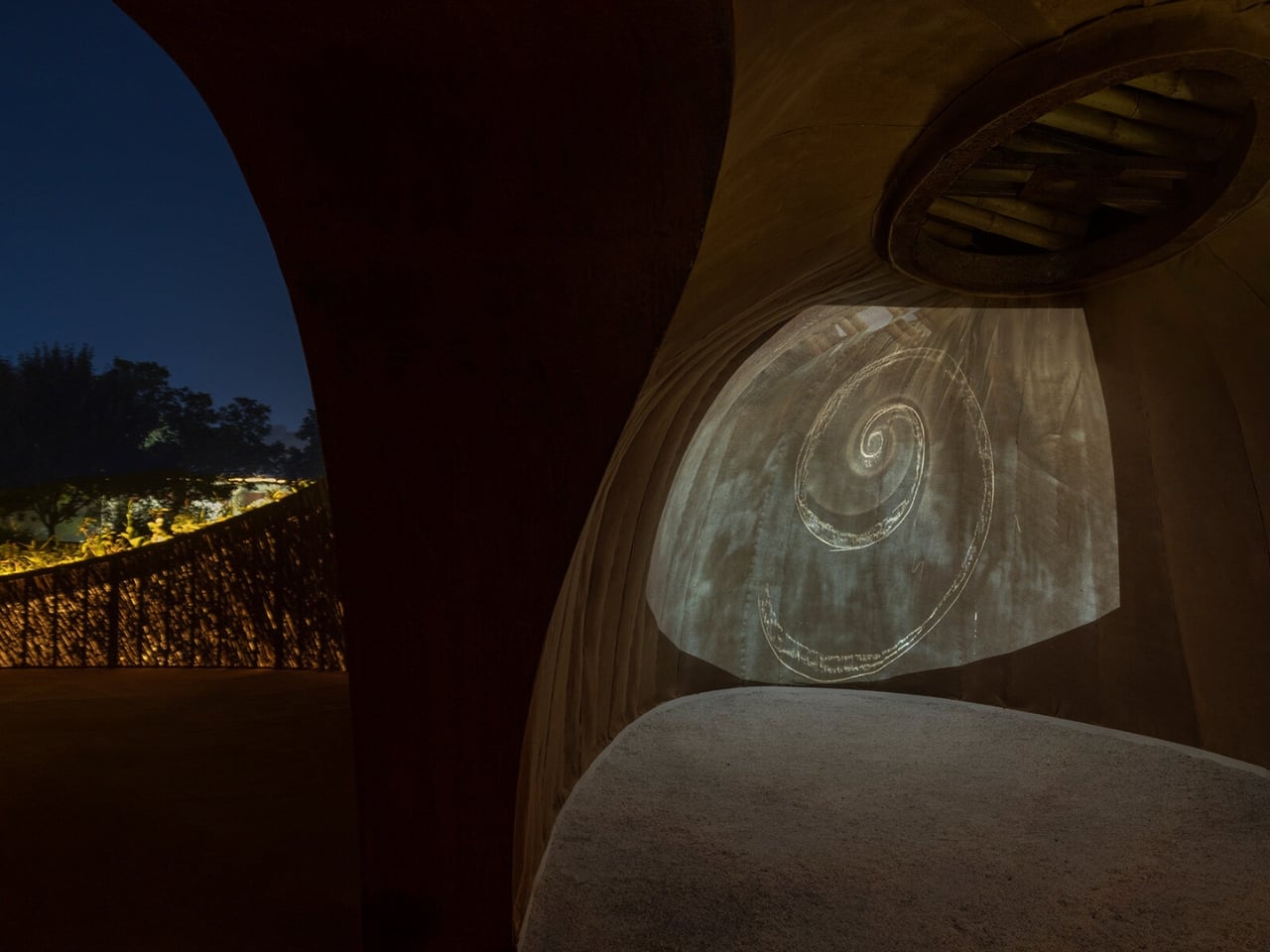
This kind of project feels important right now because it pushes back against the idea that sustainability has to look rough or unfinished. The Aranyani Pavilion is gorgeous. It proves you can create something elegant and thought-provoking while still being environmentally responsible. The spiral pathway, the play of light through the woven walls, the reflection in the water, these aren’t compromises. They’re integral to the design.
There’s also something refreshing about seeing international collaboration on a project so deeply rooted in local context. T__M.space brought architectural rigor and conceptual clarity, while Lal’s conservation background ensured the ecological narrative remained authentic. This wasn’t just slapping some green elements onto a pretty structure. It was a genuine integration of environmental science and spatial design.
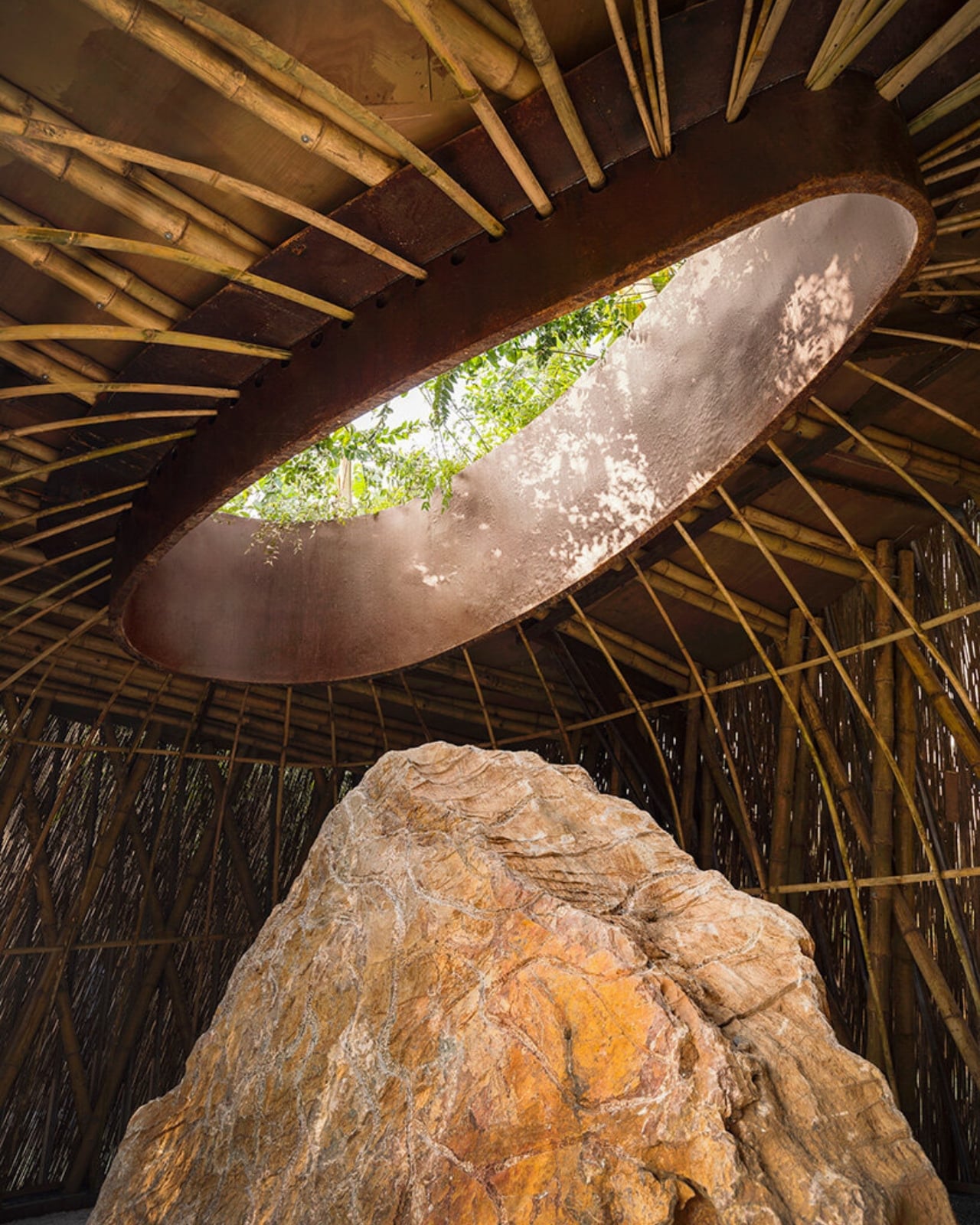
Maybe the most powerful thing about the Aranyani Pavilion is what it suggests about how we might approach other environmental challenges. What if we stopped seeing invasive species, mining waste, and other ecological problems as things to simply dispose of and started seeing them as materials with potential? What if design became a tool for transformation rather than just decoration The pavilion offers a literal and metaphorical space to pause and reconsider our relationship with the natural world. It’s architecture that asks questions as much as it provides answers.
The post This Invasive Weed Now Builds What It Once Destroyed first appeared on Yanko Design.


0 Commentaires